
September 17, 2026/
Coaching Insights The 'Default Mode Network': How Your Subconscious Mind Solves Complex Problems While You Rest Published September 17, 2026...
Running a business is exhilarating—but it can also be exhausting. You’re juggling sales, marketing, operations, finance and people management, all while trying to stay ahead of competitors and deliver value. Many entrepreneurs start their ventures seeking freedom and fulfillment only to find themselves trapped in a never‑ending cycle of work and stress. If this sounds familiar, you’re not alone. The good news? A business coach can help you transform your company and your life.
This comprehensive guide explains what business coaching is, why you might need it, how it works and how to choose the right coach. Whether you’re an early‑stage entrepreneur, a seasoned executive or someone considering a life coaching angle to integrate personal growth with business success, this article will give you the insights and tools to make informed decisions. Throughout the guide you’ll see case studies, expert tips, practical frameworks and action steps. Let’s dive in.
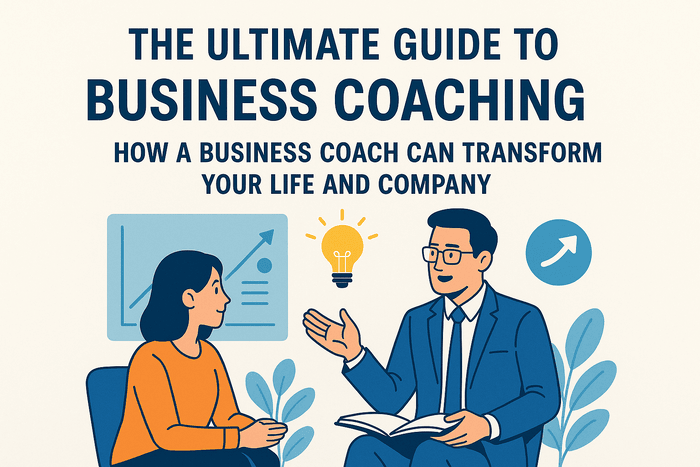
A business coach is an experienced professional who works with entrepreneurs, executives and teams to help them achieve specific business goals. Unlike consultants who usually deliver solutions for you or mentors who share general advice, business coaches partner with clients to unlock potential, co‑create strategies and hold them accountable. According to The Alternative Board, business coaches are typically expert entrepreneurs or executives who know how to grow successful businesses. They draw upon their experience and proven frameworks to guide clients through challenges and opportunities.
Understanding the differences among coaching, life coaching and consulting helps you choose the right support:
Service | Focus | Key Activities | Best For |
Business Coach | Improving business performance (revenue, profitability, leadership) | Co‑developing strategies, analysing processes, goal‑setting, accountability | Entrepreneurs, CEOs, managers |
Life Coach | Personal growth and life satisfaction (relationships, health, mindset) | Clarifying vision, improving habits, managing emotions | Individuals seeking balance or personal breakthroughs |
Consultant | Solving specific business problems | Diagnosing issues, providing solutions, often doing the work | Organisations requiring specialised expertise |
Many coaches blend business coaching with life coaching because business owners’ personal habits and mindset directly affect company performance. In this guide we’ll use “business coach” as the primary term but will integrate life‑coaching perspectives when discussing leadership and personal development.
Business coaching has grown from a niche offering into a mainstream practice embraced by Fortune 500 companies and small businesses alike. The Worldwide Association of Business Coaches (WABC) emphasises that, since 1997, evidence‑based practices and global standards have driven coaching excellence. Today the coaching industry is regulated by bodies like the International Coach Federation (ICF) and the International Association of Coaching, which set ethical guidelines and certification standards. These organisations ensure coaches are properly trained and adhere to high professional standards.
Running a business is challenging. Here are some common pain points and how a coach can help.
Not all coaches are the same. Understanding the different specialisations helps you select the right professional.
An executive coach works with CEOs, senior managers and leaders to enhance leadership skills, decision‑making, emotional intelligence and strategic thinking. This coaching is often sponsored by the organisation and aims to improve both individual and organisational performance. Executive coaches may be certified through the ICF or WABC.
A life coach helps clients achieve personal goals—improved well‑being, relationships or life satisfaction. When combined with business coaching, this coach can guide entrepreneurs to align personal values with business strategies. This holistic approach recognises that personal and professional growth are intertwined. If you’re struggling with motivation, work‑life balance or self‑confidence, a life‑oriented business coach could be the right fit.
Leadership coaching focuses on enhancing a leader’s ability to manage teams, communicate effectively and develop a high‑performance culture. It is ideal for new managers, team leads or executives stepping into bigger roles.
Performance coaches help individuals and teams improve productivity, efficiency and results. They use metrics and feedback to track progress and implement behaviour changes.
Some coaches specialise in particular industries (e.g., tech, healthcare, retail) or disciplines (e.g., sales coaching, financial coaching). An industry‑specific coach understands the unique challenges and opportunities within that sector.
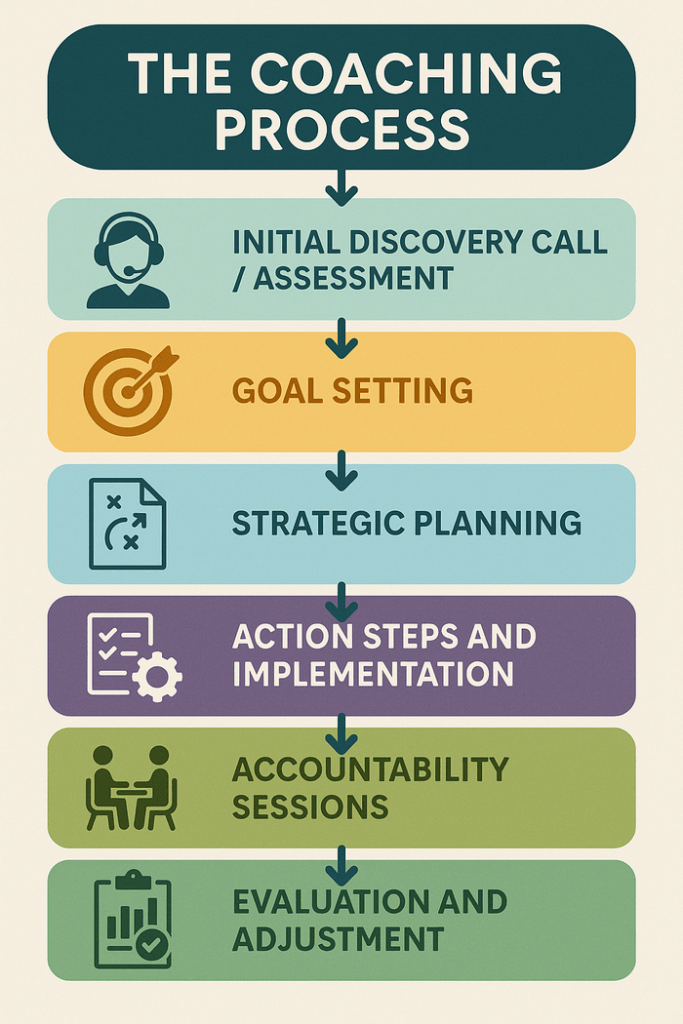
Although each coach has a unique style, most engagements follow a structured process:
Business coaches draw on various frameworks and tools, such as:
Engagements vary from a few months to several years. Short‑term coaching focuses on specific challenges (e.g., launching a new product), while long‑term coaching supports strategic transformations. Your commitment level, budget and goals determine the duration.
Situation: A family‑owned restaurant had plateaued, with revenues flat for three years. The owner worked 80‑hour weeks and had no time for strategic planning.
Coaching Intervention: A business coach conducted a SWOT analysis, identified outdated marketing practices and ineffective staff training, and guided the owner to delegate daily operations. They set an annual revenue goal of increasing sales by 20%.
Results: Within six months the restaurant saw a 25% revenue increase, improved online reviews and a 30% reduction in the owner’s working hours. The coach’s accountability kept the owner focused on high‑impact tasks.
Situation: A SaaS company with 10 employees wanted to scale but lacked systems. The founders were overwhelmed by sales, development and support responsibilities.
Coaching Intervention: An executive coach helped prioritise product improvements, introduced OKRs for goal alignment and coached the founders on leadership and delegation. They also facilitated hiring a VP of Sales.
Results: Over 18 months the company tripled annual recurring revenue and grew to 35 employees. Founders reported better work‑life balance and more strategic focus.
Situation: A solo consultant struggled with self‑doubt and inconsistent income. She felt like an imposter and procrastinated on marketing her services.
Coaching Intervention: A life‑oriented business coach worked on mindset, limiting beliefs and confidence. They set small weekly goals and used the GROW model to break larger goals into manageable steps.
Results: Within a year, the consultant doubled her client base, raised her rates and felt confident speaking at industry events. The blend of business strategy and life coaching created holistic success.
These stories highlight a few universal principles:
Choosing a coach is like hiring a key team member. The right fit is essential. Here’s a step‑by‑step approach.
While coaching isn’t a licensed profession, reputable coaches often hold certifications. Here are a few to consider:
Check whether the coach invests in ongoing professional development. A credible coach will be transparent about training and experience.
Credentials matter, but personal fit is equally important. You’ll be sharing sensitive business information and working closely on growth strategies. During initial calls, pay attention to whether the coach listens well, asks insightful questions and aligns with your values. Trust your intuition—if you feel pressured or misunderstood, look elsewhere.
The investment in business coaching varies widely based on experience, location, specialization and scope. Here are common pricing models:
Pricing Model | Typical Range (USD) | Description |
Hourly Rate | $150 – $500 per hour | Used for ad‑hoc sessions or focused consultations. |
Monthly Retainer | $500 – $5,000 per month | Includes a set number of sessions and support via email/phone. Often the most popular option. |
Project or Program Package | $2,000 – $20,000+ | Fixed‑price engagement for a defined period (e.g., 12‑week start‑up program). |
Equity/Performance‑Based | Negotiated | Rarely used; coach takes a percentage of revenue or equity in exchange for services. |
Instead of focusing solely on cost, consider the return on investment. Ask yourself: How much additional revenue or efficiency will this coaching generate? Many clients report ROI of 5×–10× or more, making coaching a worthwhile investment.
A business coach can be the catalyst that takes your company from good to great. By partnering with the right coach, you gain clarity, accountability and strategic insight—freeing you to work on the business instead of just in it. Top‑ranking coaching sites emphasise clear titles and descriptions, benefit‑driven headings, comprehensive content, strong CTAs and authoritative tone. Following these best practices in your own content will also improve your online visibility.
If you’re ready to explore coaching, start by identifying your goals and researching certified coaches. Schedule a discovery call, ask the questions outlined above and evaluate the chemistry. Whether you choose a business‑focused coach, a life coach with a business lens or a specialist in your industry, investing in coaching can yield exponential returns for both your business and your personal growth.
Coaching Insights The 'Default Mode Network': How Your Subconscious Mind Solves Complex Problems While You Rest Published September 17, 2026...

Coaching Insights Why Traditional To-Do Lists Fail (And How Goal-Centric Visual Mapping Works Better) Published September 15, 2026 5 min...

Coaching Insights The 5-Minute Brain Reset: How Solution-Focused Micro-Habits Reclaim Your Focus Published September 13, 2026 5 min read Solution-Focused...

Coaching Excellence Why Success-Driven Professionals Suffer From 'Imposter Perfectionism' Published September 11, 2026 5 min read Solution-Focused Leadership Table of...

Coaching Insights The 'Invisible Work' Burnout: Why Managing Other People’s Emotions Is Draining You Published September 9, 2026 5 min...

Coaching Tools & Models The 'Zeigarnik Effect': Why Unfinished Tasks Are Secretly Ruining Your Focus Published September 4, 2026 5...

Coaching Tools & Models The ‘Quiet Overthinker’ Trap: Why You Keep Replaying Old Conversations in Your Head Published September 2,...

Team Coaching Enneagram Personality Types: What Your Type Reveals About How You Think, Lead and Grow Published August 31, 2026...

Team Coaching 5 Micro-Phrases People With High Emotional Intelligence Use Under Pressure Published August 31, 2026 5 min read Solution-Focused...