
September 17, 2026/
Coaching Insights The 'Default Mode Network': How Your Subconscious Mind Solves Complex Problems While You Rest Published September 17, 2026...

Coaching is more than dispensing advice; it is a partnership built on trust, active listening and shared understanding. At the heart of this relationship lies empathy—the ability to recognise, understand and share the emotions of another person. Many new coaches focus on techniques and frameworks, yet the most transformative coaching experiences occur when empathy is the guiding principle. This comprehensive guide explores empathy in coaching, explains why it matters, differentiates it from sympathy, and offers practical methods to cultivate empathy as a coach.
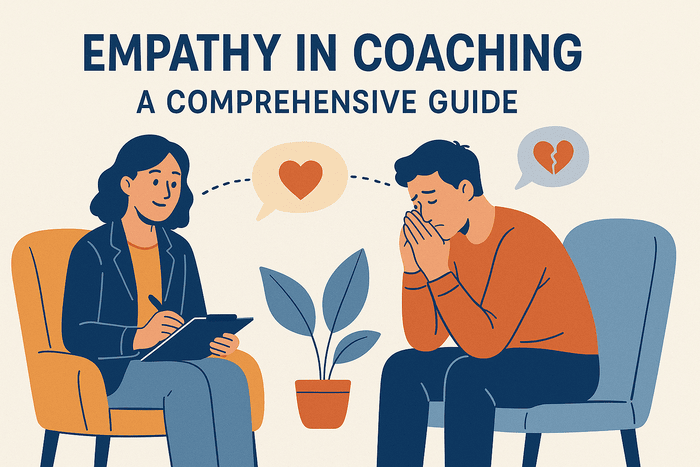
Empathy is often confused with sympathy. While sympathy involves feeling pity for someone else, empathy is being with the person—seeing the world through their eyes and feeling what they feel. According to nursing scholar Theresa Wiseman, empathy has four components: perspective taking, non‑judgment, recognising emotion, and communicating understanding. These elements help coaches connect deeply with clients, creating a safe environment where clients feel seen and supported.
In coaching contexts, empathy means holding space without trying to fix the client’s problems. Joseph Grech explains that when coaches listen empathetically rather than advising, clients are empowered to find their own solutions. Empathy enables the coach to stay present, maintain healthy boundaries and guide clients toward self‑directed growth.
Empathy is not an optional extra; it is central to effective coaching for several reasons:
Understanding the distinction between empathy and sympathy helps coaches avoid common pitfalls.
Aspect | Empathy | Sympathy |
Definition | Feeling with someone; recognising and sharing their emotions | Feeling for someone; pitying or feeling sorry for someone |
Focus | Client‑centred; aims to understand and validate the client’s experience | Coach‑centred; may unintentionally impose coach’s perspective |
Impact on Coaching | Encourages deeper connection and empowerment; respects autonomy | Can create dependence; may lead to advice‑giving or rescuing |
Example Statement | “That must have been really disappointing; how did it make you feel?” | “I’m so sorry you’re going through that. You should try …” |
The Coaching Room emphasises that sympathy involves “suffering with” a person, while empathy is “being with”. Empathy invites coaches to share the client’s emotional experience without judgement and without taking over, thus preserving the client’s agency.
Empathy can be cultivated. Below are four core elements identified by Wiseman and how they apply to coaching.
This element involves putting oneself in the client’s shoes. Coaches should strive to understand the client’s worldview and frame of reference. Useful practices include:
Judgement shuts down exploration and trust. Coaches should:
Empathy requires sensitivity to emotional cues. Techniques include:
Communicating that you understand and empathise involves:
Empathy is a skill that can be strengthened. Below is a roadmap divided into key areas.
Active listening is fundamental to empathy. Positive Coaching Alliance offers simple yet powerful behaviours: ask questions, listen to understand rather than reply, believe the person’s perspective, and show appreciation. Coaches can practice active listening through:
Mindfulness helps coaches recognise their own emotions and cultivate empathy for others. The Erickson article suggests techniques such as meditation and journaling. To integrate mindfulness:
Understanding your own triggers ensures your reactions don’t interfere with coaching. Reflect on questions like:
Coaches who explore triggers can stay more neutral during sessions and maintain empathy.
Coaches who practice self‑compassion are better equipped to manage challenges and support clients effectively. Steps include:
Cultural awareness is integral to empathy. Coaches should learn about different cultural norms and communication styles. Ask clients about their cultural perspectives and incorporate inclusive language. Avoid making assumptions about values or experiences; instead, invite clients to educate you about their context.
Active listening goes hand in hand with empathy. The following steps form a practical framework:
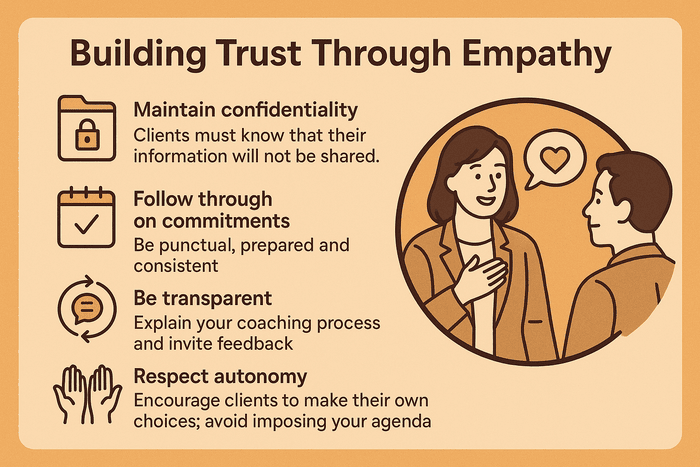
Trust is the glue of the coaching relationship. To cultivate trust:
Empathy plays a key role in trust by signalling respect for the client’s experiences and emotions.
In group or team settings, empathy helps create cohesion. Strategies include:
Below is a sample checklist for developing empathy. Coaches can use it as a self‑assessment or as a session guide.
Step | Action | Reflection Questions |
1. Prepare | Meditate or breathe for 3–5 minutes to clear the mind. | What emotions am I bringing into this session? |
2. Set Intentions | Remind yourself that your role is to listen and facilitate growth, not fix problems. | How will I demonstrate non‑judgment? |
3. Perspective Taking | Ask open‑ended questions and paraphrase the client’s responses. | Am I imposing my perspective, or truly seeing through theirs? |
4. Recognise Emotions | Notice non‑verbal cues and name the client’s emotions. | What emotions do I perceive? How do I validate them? |
5. Communicate Understanding | Use reflective statements and validate feelings. | Have I expressed appreciation for the client’s sharing? |
6. Practise Self‑Compassion | After the session, reflect on your own feelings and practice self‑kindness. | What did I learn about myself? |
Coaches can adapt this checklist as part of their personal development or integrate pieces into session notes.
Here are actionable suggestions to integrate empathy into your coaching practice:
Empathy is not a soft skill reserved for counsellors; it is a foundational competency that transforms coaching from transactional to transformational. By developing empathy, coaches help clients feel heard, understood and empowered to unlock their own solutions. Practicing perspective taking, non‑judgment, recognising emotions and communicating understanding will strengthen your coaching relationships and improve outcomes.
Coaching Insights The 'Default Mode Network': How Your Subconscious Mind Solves Complex Problems While You Rest Published September 17, 2026...

Coaching Insights Why Traditional To-Do Lists Fail (And How Goal-Centric Visual Mapping Works Better) Published September 15, 2026 5 min...

Coaching Insights The 5-Minute Brain Reset: How Solution-Focused Micro-Habits Reclaim Your Focus Published September 13, 2026 5 min read Solution-Focused...

Coaching Excellence Why Success-Driven Professionals Suffer From 'Imposter Perfectionism' Published September 11, 2026 5 min read Solution-Focused Leadership Table of...

Coaching Insights The 'Invisible Work' Burnout: Why Managing Other People’s Emotions Is Draining You Published September 9, 2026 5 min...

Coaching Tools & Models The 'Zeigarnik Effect': Why Unfinished Tasks Are Secretly Ruining Your Focus Published September 4, 2026 5...

Coaching Tools & Models The ‘Quiet Overthinker’ Trap: Why You Keep Replaying Old Conversations in Your Head Published September 2,...

Team Coaching Enneagram Personality Types: What Your Type Reveals About How You Think, Lead and Grow Published August 31, 2026...

Team Coaching 5 Micro-Phrases People With High Emotional Intelligence Use Under Pressure Published August 31, 2026 5 min read Solution-Focused...