
The 5 Management Skills That Define Leadership in an AI-Driven World
June 24, 2026
The rules of leadership are being rewritten.
Over the last decade, leaders have navigated remote work, economic uncertainty, shifting employee expectations, and rapid technological advances. Now, with artificial intelligence moving from experimentation to everyday business operations, organizations face another major inflection point.
Many of the management skills that once guaranteed success are no longer enough.
Employees are expected to adapt faster than ever before. Teams are working across time zones and digital platforms. Job roles are evolving in real time. Information overload has become the norm. At the same time, leaders are expected to maintain productivity, sustain engagement, and deliver results.
In this environment, the most effective leadership styles are no longer centered solely on directing work and monitoring performance. They focus on enabling people to think, learn, adapt, and grow.
So what does it take to lead successfully in 2026?
Whether you’re managing a small team, leading a department, or preparing for an executive role, these are the five essential management skills that will define effective leadership in the years ahead.
Why Leadership Styles Need to Evolve in 2026
Traditional leadership often rewarded control.
Managers were expected to provide answers, assign responsibilities, evaluate outcomes, and ensure compliance. This approach worked reasonably well in stable environments where roles were clearly defined and change happened gradually.
Today’s workplace looks very different.
Artificial intelligence is automating repetitive tasks. Hybrid work has altered team dynamics. Employees increasingly seek purpose, flexibility, and opportunities for growth. The pace of change means that leaders often don’t have all the answers themselves.
This shift demands new leadership styles.
The leaders who thrive in 2026 won’t simply be experts in execution. They’ll be facilitators of learning, builders of trust, and catalysts for innovation.
The future of leadership isn’t about becoming less accountable. It’s about becoming more human.
Skill 05 of 05
Strategic Communication
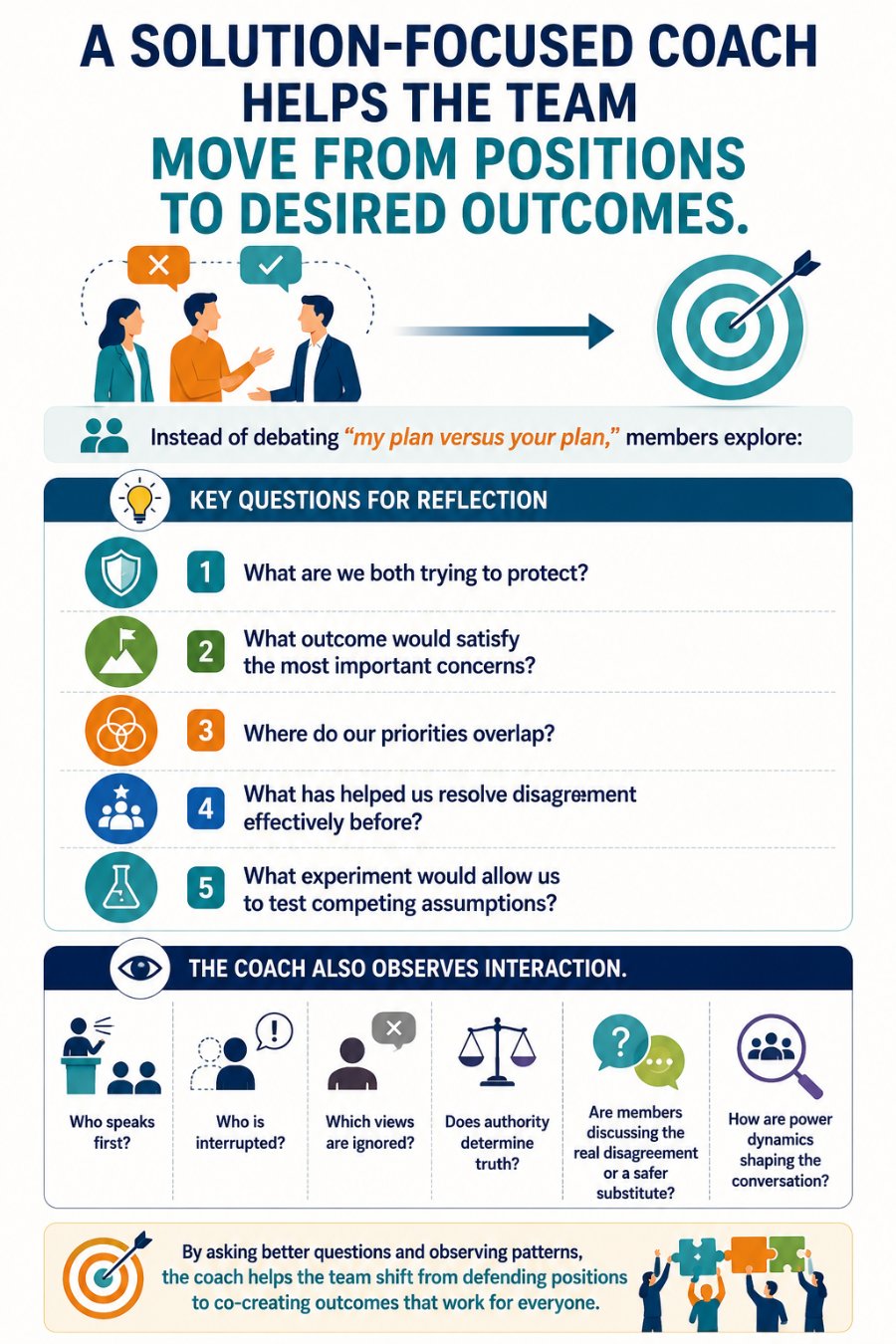
🔍 Click infographic to open full resolution
One of the most overlooked management skills is the ability to communicate with clarity during uncertainty.
When employees don’t understand what’s changing, why it’s changing, or how it affects them, they often create their own narratives. Those narratives can quickly turn into anxiety, resistance, or disengagement.
Strategic communication requires leaders to:
- Explain the “why” behind decisions.
- Share information consistently.
- Listen before responding.
- Encourage questions.
- Clarify expectations.
- Adapt communication styles to different audiences.
The best leaders understand that communication isn’t simply transmitting information. It’s creating shared understanding.
This becomes especially important when organizations introduce new technologies or restructure workflows. Employees need transparency, not perfection. They don’t expect leaders to know everything. They expect honesty, consistency, and direction.
Among modern leadership styles, communicative leaders create stability even when circumstances remain uncertain.
Skill 04 of 05
Building High-Trust Teams
No list of team building strategies is complete without trust.
Trust determines whether employees speak up with ideas, admit mistakes, challenge assumptions, and collaborate effectively.
Without trust, teams operate defensively. With trust, teams innovate.
Effective team building strategies in 2026 include:
Create Psychological Safety
Employees should feel safe expressing concerns, asking questions, and sharing different perspectives without fear of embarrassment or punishment.
Encourage Ownership
Rather than micromanaging, invite team members to participate in decision-making and problem-solving.
Celebrate Collective Success
Recognize collaboration, not just individual achievement.
Normalize Learning
Treat mistakes as opportunities for improvement rather than evidence of incompetence.
Foster Human Connection
Remote and hybrid teams need intentional opportunities to connect beyond project updates.
Strong teams aren’t built through occasional offsites alone. They’re built through everyday interactions that reinforce trust, respect, and accountability.
Skill 03 of 05
Understanding How to Motivate a Team
One of the most common questions leaders ask is simple: how do you motivate a team?
The answer has changed dramatically.
For years, motivation was associated primarily with compensation, incentives, and rewards. While those factors still matter, they rarely sustain long-term engagement on their own.
Today’s employees seek something deeper. They want meaningful work. They want growth. They want autonomy. They want to know their contributions matter.
If you’re wondering how to motivate a team in 2026, focus on these principles:
Connect Work to Purpose
Help employees understand how their efforts contribute to organizational goals and broader impact.
Provide Growth Opportunities
People stay engaged when they continue learning and expanding their capabilities.
Recognize Contributions Frequently
Recognition doesn’t always require formal awards. Specific, timely appreciation often has greater impact.
Encourage Autonomy
Micromanagement diminishes motivation. Trust people to make decisions within clear boundaries.
Invest in Development
Employees who believe their leaders care about their future are more likely to remain committed and perform at higher levels.
Great leaders don’t manufacture motivation. They create the conditions where motivation naturally flourishes.
Skill 02 of 05
Adaptive Decision-Making
The speed of change means leaders increasingly make decisions with incomplete information.
Waiting for certainty is no longer a competitive advantage.
Adaptive decision-making involves balancing analysis with action. It requires leaders to:
- Gather relevant data quickly.
- Test assumptions.
- Experiment in small ways.
- Learn from outcomes.
- Adjust strategies when needed.
- Remain open to new information.
Among the various leadership styles emerging today, adaptive leaders demonstrate confidence without rigidity. They recognize that changing direction isn’t a sign of weakness.
It’s often evidence of wisdom.
In a world shaped by technological disruption, adaptability may be one of the most valuable management skills leaders can develop.
Skill 01 of 05 — The Defining Skill
Coaching Teams Through Technological Disruption
This is the management skill that will define leadership in 2026.
Organizations everywhere are embracing artificial intelligence. Some employees are excited. Others are uncertain. Many experience both emotions simultaneously.
Questions arise quickly: Will my role change? Will my skills become obsolete? What does success look like now? How do I stay relevant? How should I work alongside AI?
These concerns cannot be addressed through directives alone. They require leaders who coach.
According to the Leader as a Coach in the AI-Driven World program, employees increasingly experience:
- Constant change
- Role ambiguity
- Skill disruption
- Information overload
- Faster performance expectations
- Anxiety about relevance and job security
- Hybrid and remote collaboration challenges
In response, organizations need leaders who can listen deeply, enable thinking, build confidence, encourage experimentation, facilitate learning, create clarity amid uncertainty, support emotional resilience, and unlock human potential.
This represents one of the most significant shifts in leadership styles in recent history.
The Rise of the Coaching Leadership Style
A coaching leadership style doesn’t abandon accountability. It strengthens it.
Instead of solving every problem personally, they help people develop the thinking skills needed to solve problems independently.
Consider the difference.
- — Gives answers
- — Directs action
- — Focuses primarily on tasks
- — Controls outcomes
- — Solves problems for others
- ✓ Asks thoughtful questions
- ✓ Encourages ownership
- ✓ Develops people
- ✓ Facilitates learning
- ✓ Builds capability over time
Coaching leadership doesn’t slow performance. It improves it.
Employees become more resourceful, resilient, and engaged because they’re actively involved in generating solutions.
Coaching Conversations That Matter
Small shifts in language can transform team dynamics.
These conversations encourage reflection, accountability, and growth.
Perhaps most importantly, they reinforce trust.
Why AI Makes Human Coaching More Important
Artificial intelligence can analyze patterns. It can generate insights. It can automate routine tasks.
But it cannot fully replicate human empathy, ethical judgment, intuition, or the experience of being genuinely understood.
Technology can enhance leadership. It cannot replace humanity.
The leaders who succeed will learn to combine both — leveraging AI and coaching together, using technology for efficiency while strengthening the uniquely human capabilities that help people thrive.
In Partnership with xMonks
Ready to lead humans in an AI-driven world?
Many leaders recognize that the workplace is changing. Far fewer know how to adapt their leadership styles to meet these challenges effectively. Leader as a Coach in the AI-Driven World was built for exactly this moment.
A workshop hosted by xMonks — recommended by Erickson Coaching International.
Participants explore how to:
- Transition from directive management to coaching-based leadership.
- Understand the impact of AI on people, teams, and organizational culture.
- Build trust and psychological safety in technology-enabled workplaces.
- Use coaching conversations to enhance performance and accountability.
- Lead teams through uncertainty and continuous change.
- Balance AI efficiency with empathy and human judgment.
- Foster collaboration between humans and intelligent technologies.
Unlike purely theoretical leadership programs, this highly practical experience focuses on real-world application. Participants leave with actionable frameworks, coaching tools, and strategies they can immediately implement within their teams.
For leaders seeking to future-proof their management approach, the ability to coach through disruption is rapidly becoming a competitive advantage. Explore the Leader as a Coach Workshop to get started.
Developing Future-Ready Leadership Styles
Leadership styles will continue evolving. What remains constant is the need for leaders who elevate the people around them.
The most effective leaders in 2026 will:
- Communicate clearly.
- Build trust intentionally.
- Understand how to motivate a team authentically.
- Use team building strategies that foster belonging and accountability.
- Adapt quickly to change.
- Coach people through uncertainty and transformation.
Technical expertise will always matter. But expertise alone won’t define leadership success.
The future belongs to leaders who know how to develop human potential while navigating technological advancement. Read more about the future of leadership on the xMonks resource hub.
Questions, Answered
Frequently Asked Questions
What are the most important management skills in 2026?
The five most essential management skills for 2026 are:
- Strategic communication
- Building high-trust teams
- Understanding how to motivate a team
- Adaptive decision-making
- Coaching teams through technological disruption
While all five are important, coaching has emerged as a critical capability because employees increasingly need support navigating constant change, evolving roles, and AI-driven transformation.
What leadership styles are most effective today?
The most effective leadership styles in today’s workplace combine adaptability with empathy.
Modern leaders move beyond purely directive approaches and embrace coaching, collaboration, and continuous learning. Coaching leadership, in particular, helps employees develop problem-solving abilities, resilience, and ownership.
How do you motivate a team without relying only on incentives?
If you’re wondering how to motivate a team, start by focusing on intrinsic motivators:
- Connect work to purpose.
- Recognize contributions regularly.
- Provide opportunities for growth.
- Encourage autonomy.
- Invest in employee development.
While compensation matters, long-term engagement is often driven by meaning, trust, and progress.
What are effective team building strategies for hybrid teams?
Successful team building strategies for hybrid and distributed teams include:
- Creating psychological safety.
- Encouraging open communication.
- Establishing clear expectations.
- Recognizing collaborative achievements.
- Scheduling intentional moments for connection.
- Promoting shared accountability.
Trust and consistency matter more than occasional team-building activities.
Why is coaching becoming an essential leadership skill?
Traditional management focuses on directing work. Coaching leadership focuses on developing people.
As organizations navigate rapid technological change, leaders increasingly need to help employees think critically, adapt quickly, and build confidence in uncertain environments. Coaching enables leaders to unlock human potential rather than simply oversee tasks.
Can AI replace human leadership and coaching?
Artificial intelligence can improve efficiency, automate repetitive tasks, and provide valuable insights.
However, human leadership remains essential. Empathy, ethical judgment, contextual understanding, emotional resilience, and trust-building are uniquely human capabilities that technology cannot fully replicate. Research and industry experience continue to show that AI works best when paired with strong human leadership.
How can leaders prepare for the future of work?
Leaders can prepare for the future by:
- Developing coaching capabilities.
- Staying curious about emerging technologies.
- Investing in emotional intelligence.
- Encouraging experimentation and learning.
- Building adaptable teams.
- Strengthening communication skills.
The future of leadership belongs to those who combine technological fluency with human-centered leadership.
The leaders who thrive in 2026 won’t have the most answers.
They’ll be the ones who ask better questions, unlock the strengths of their people, and help teams move forward with confidence. Communicate strategically. Build trust. Motivate meaningfully. Adapt continuously. And above all, learn to coach.
This workshop is hosted by xMonks.